

 Socio-economic wellbeing
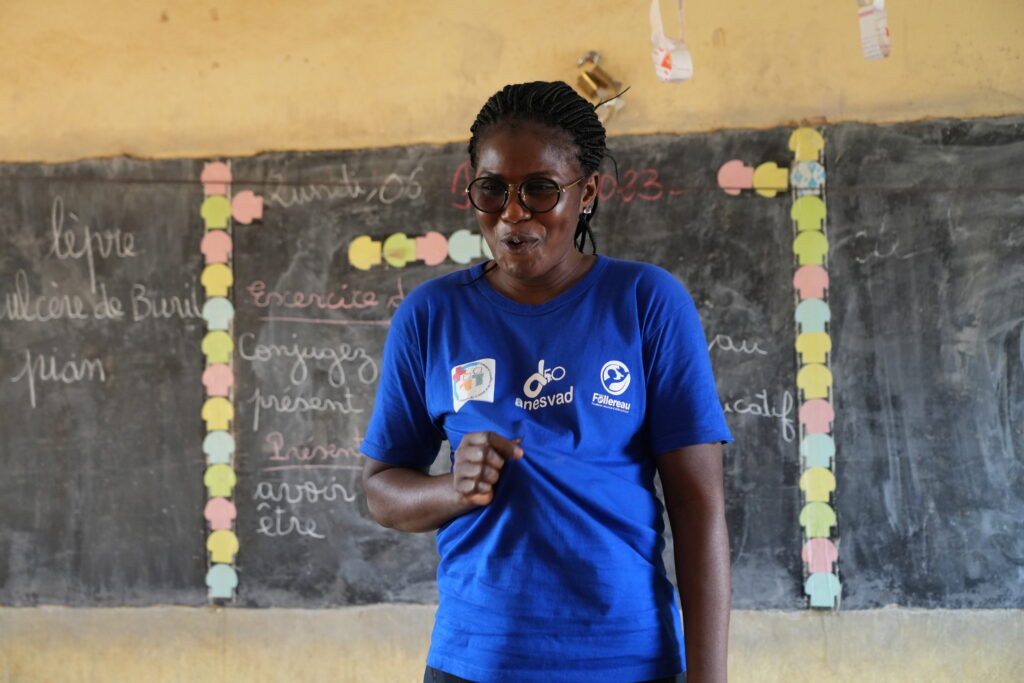
Sadikou Fatim Christianne: community health worker and cultural leader in Chiépo, Côte d’Ivoire.
"The training we’ve delivered has been challenging, but after two years, there have been good results. I’m very happy because it has helped to make them more independent and now they’re doing a lot more things for themselves"
Introduction:
Sadikou Fatim, better known simply as Fatim, is a cultural leader and community health worker under the hygiene and sanitation project that the Anesvad Foundation and the Raoul Follereau Foundation run in the community of Chièpo in Côte d’Ivoire.
-

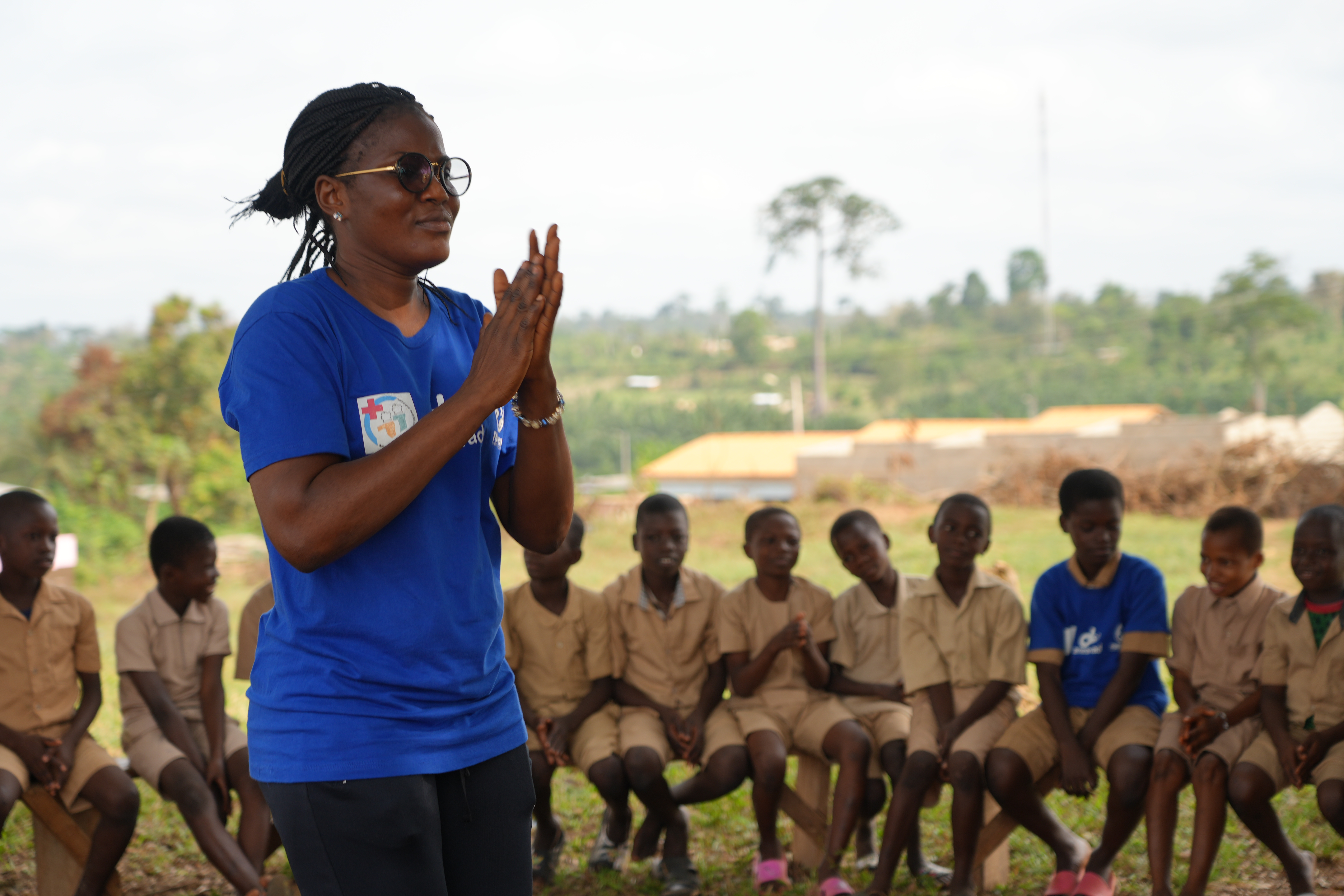
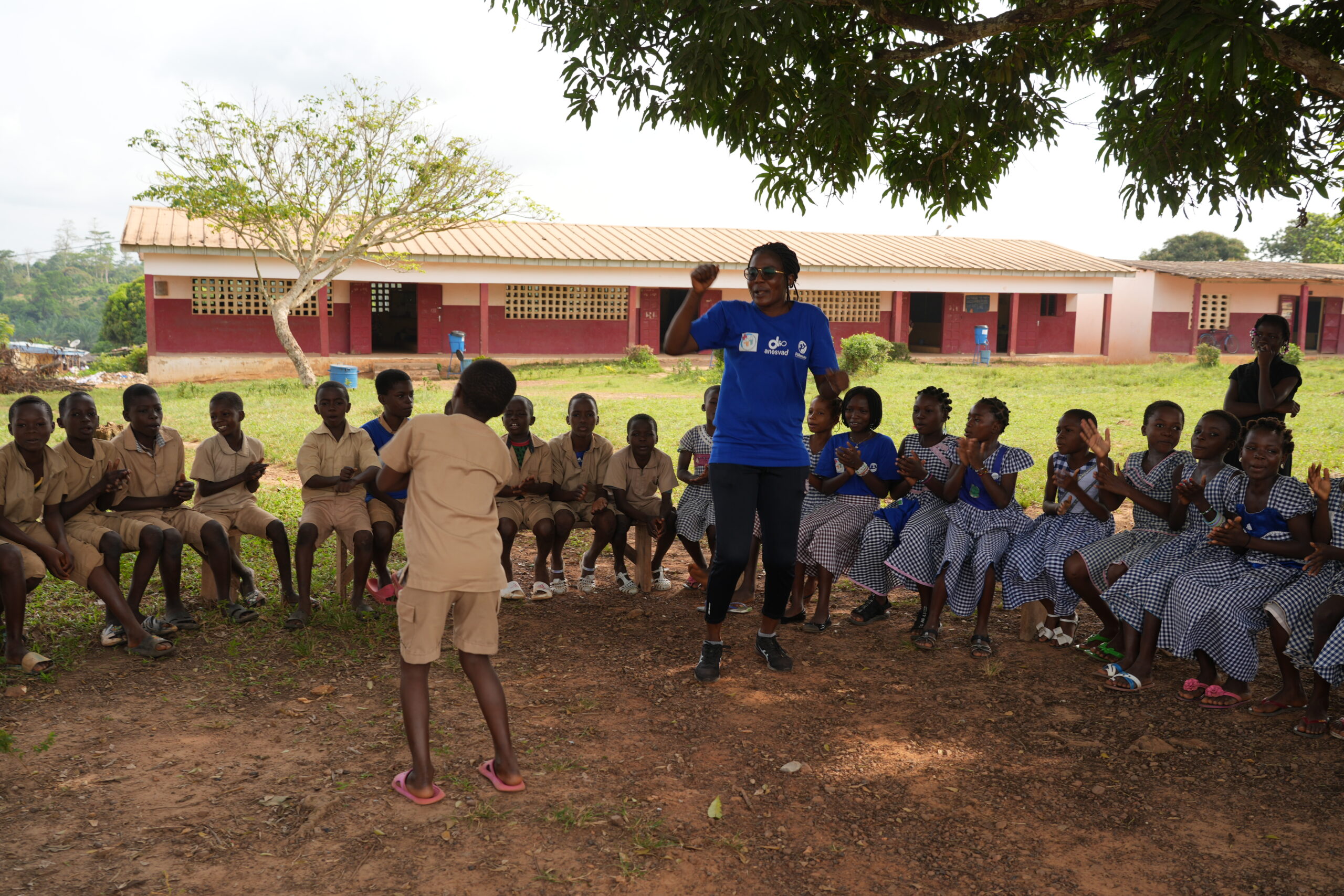
Sadikou Fatim Christianne en mitad de un círculo de estudiantes mientras imparte su taller de sensibilización y buenas prácitcas de higiene
Grupo de niños y niñas rodean a Sadikou Fatim en mitad de una sesión de senibilización impartida en el colegio de Chiépo -
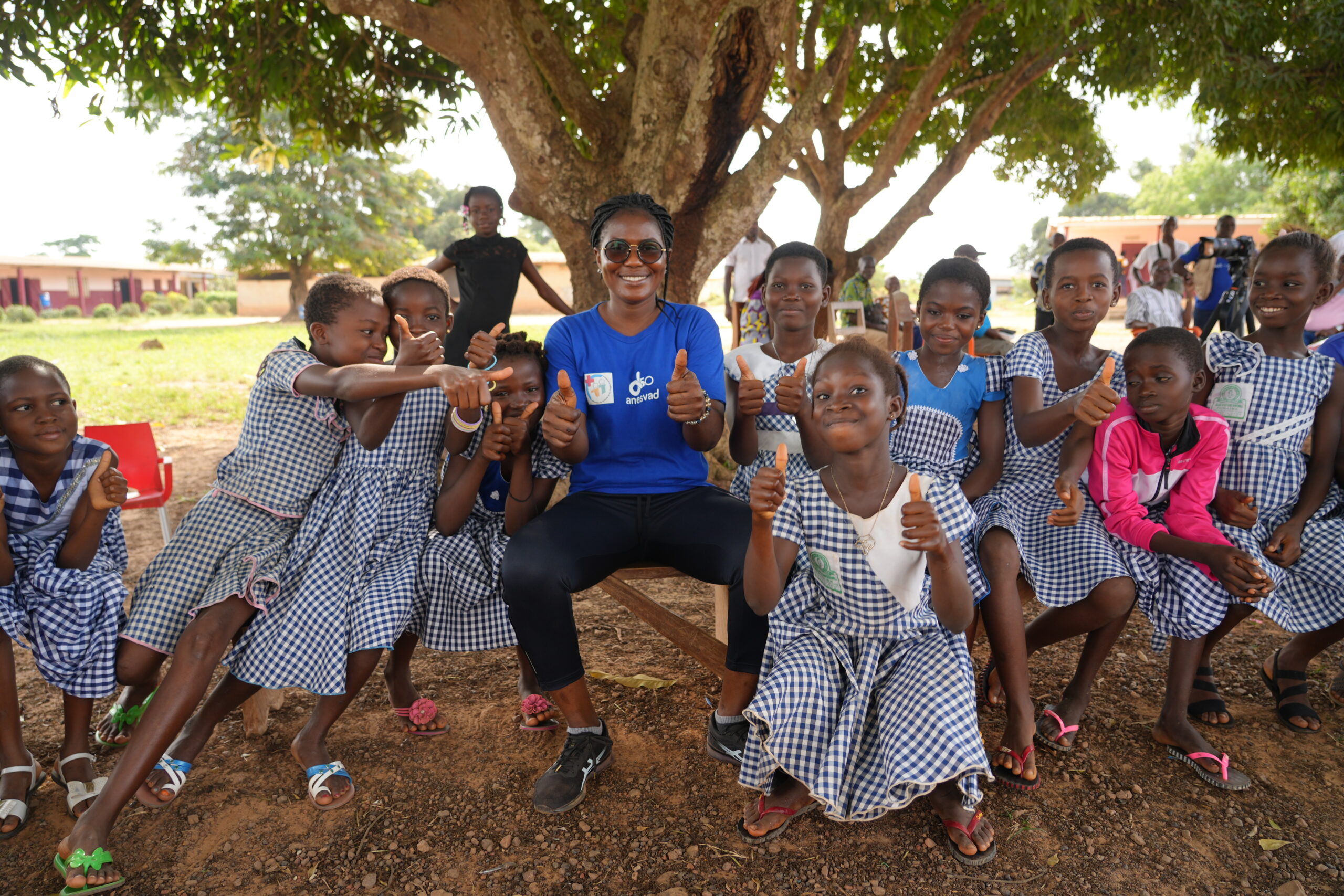
Sadikou Fatim Christianne en mitad de un círculo de estudiantes mientras imparte su taller de sensibilización y buenas prácitcas de higiene
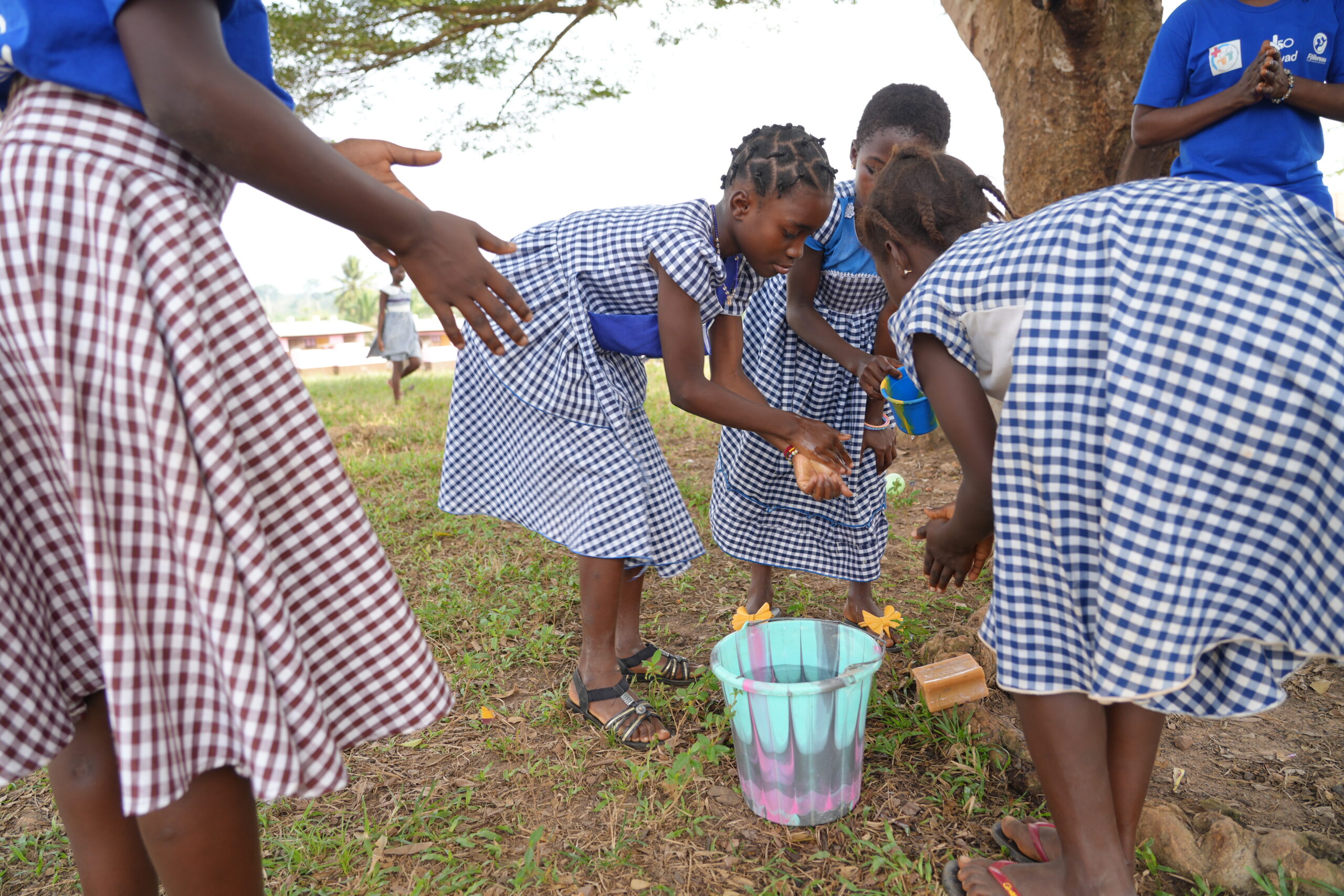
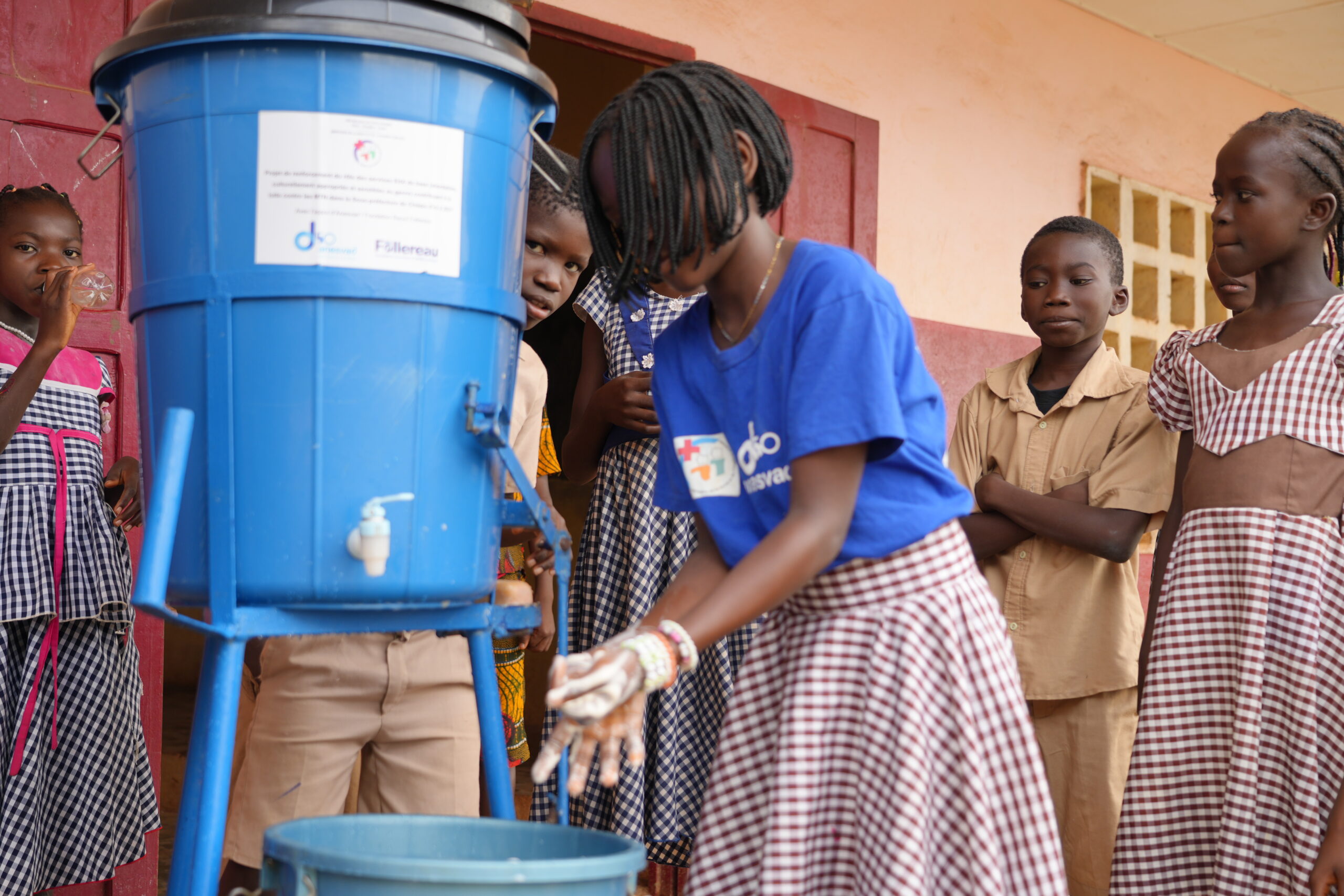
Estudiantes del colegio de Chiépo practican lo aprendido en la clase de sensibilización mientras se limpian las manos en un cubo con jabón local -
Sadikou Fatim Christianne en mitad de un círculo de estudiantes mientras imparte su taller de sensibilización y buenas prácitcas de higiene
Niña del colegio de Chiépo, Costa de Marfil, se limpia las manos en un punto de agua implementado por el proyecto de Fundación Anesvad mientras un grupo de niños y niñas la miran y esperan su turno


Anesvad Foundation:
Fatim, as the project leader, what is your role?
Sadikou Fatim:
My role in the Anesvad Foundation and Raoul Follereau Foundation project is to share knowledge with women and students in the schools.
In the schools, we focus on teaching children good hygiene and sanitation habits and how to distinguish them from bad ones. We teach them how to wash their hands, to wash them after every meal, after defecating, after playing. Our aim is for the children to improve their personal hygiene.
Anesvad Foundation:
You seem to be passionate about teaching in schools although it can’t be easy. How do you prepare these classes on the importance of hygiene?
Sadikou Fatim:
First of all, you have to love what you do, and I love what I do. I prepare the lessons at home in advance. When I come to class, I introduce myself to the students. I say: “Good morning, my name is Fatim, I love the colour blue and I like rice very much”.
I use gestures so that the children feel that they’re on the same level as me. I use simple instead of grandiloquent words, so that they can identify with me. When I see that the children are tired, exhausted, I sing a song to try to motivate them and I start the class.
Anesvad Foundation:
How does it make you feel to see the positive impact your classes have on the students?
Sadikou Fatim:
It makes me feel happy and satisfied. When we talk to the children in the community, it’s like they give us great motivation, because they bring us joy, satisfaction, excitement. I therefore do everything I can to put them on the same level as others and I reach out to them.
It’s not easy to educate or to speak in public, sometimes in front of a thousand children! Some of them are shy; they want to speak, but they’re afraid. Others raise their hands: “Fatim, I want to speak!” I buy sweets, I put them in my pocket and, when I go up to them, I ask them: “What’s wrong? Are you sick? – “Yes”, and I say: “No, don’t be afraid, little by little you’ll get better”. I give them a piece of candy and in that way, poof, I win them over.
Anesvad Foundation:
In addition to students in the schools, you also work with women in the community. What is that work like?
Sadikou Fatim:
Here, we make our living from agriculture, so a lot of the women work in the fields and do housework. Most of them are mothers, so they carry a heavy burden. They go to the fields, they come back from the fields, they have to cook, take care of the children…
In the methodologies we’ve put into practice, we teach them about hygiene and sanitation or how to make soap and make different items of clothing.
This has given them a sense of fulfilment. The training we’ve delivered has been challenging, but after two years, there have been good results. At the beginning, they were reluctant, but little by little, over the course of the training, they came to understand. Many came and I’m very happy because it’s helped to make them more independent and now they’re doing a lot more things for themselves.
